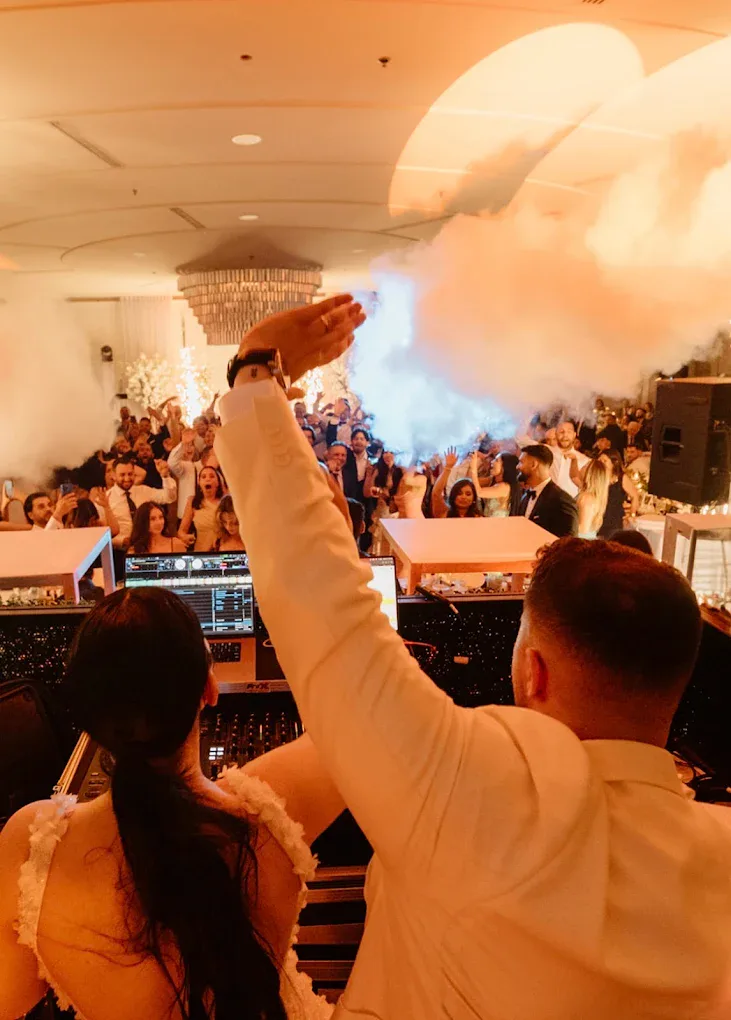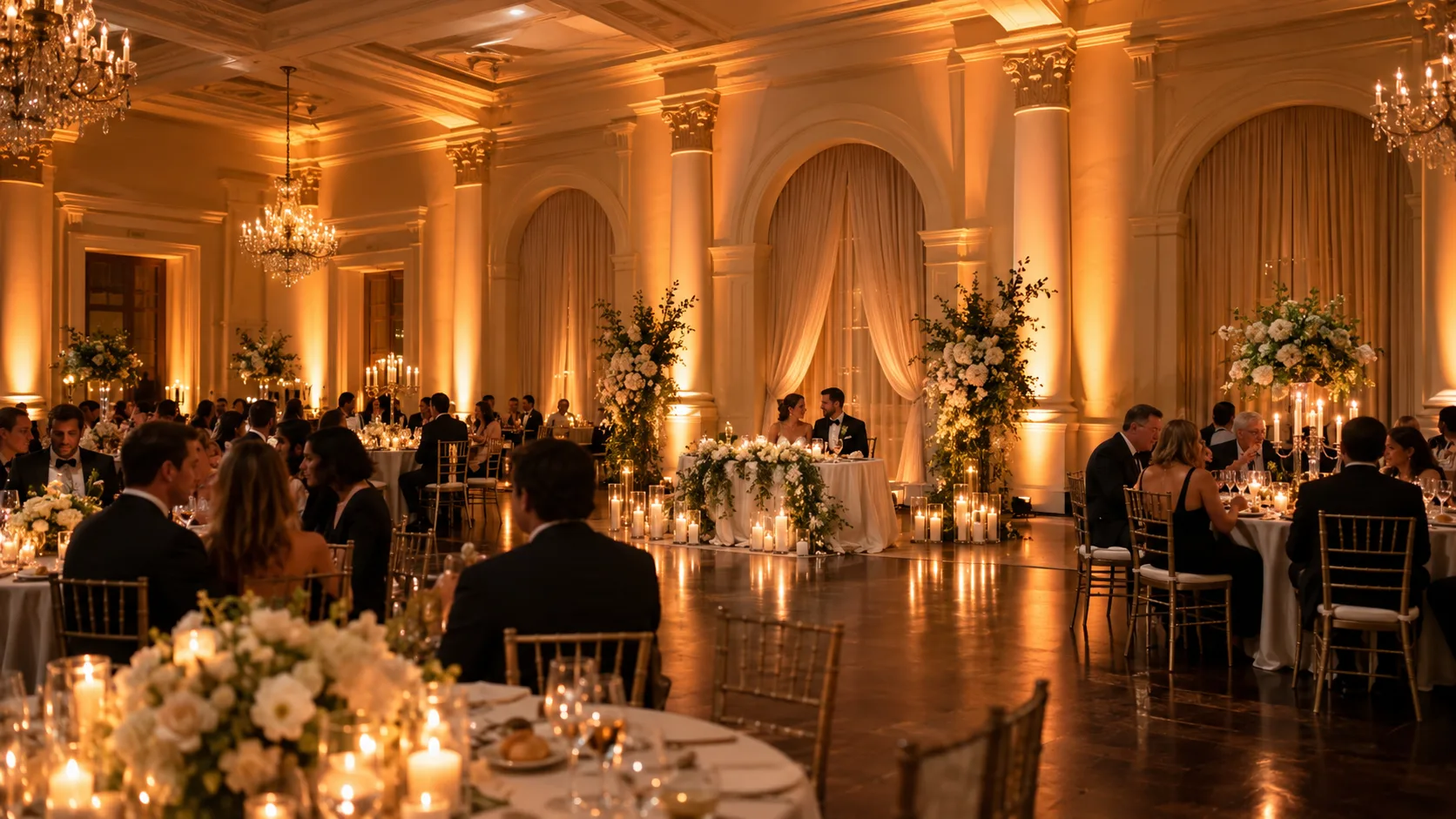
Uplighting is one of those things almost every couple has seen and almost nobody can describe. You save a photo of a room glowing warm amber, you send it over and say "we want it to look like this," and then someone asks how many lights you need and the conversation stops.
Fair question. The honest answer is that there is no magic number. Good uplighting is less a formula than an understanding of the room, the architecture and the atmosphere you want, and how the three work together.
That is why we treat it as an art rather than a calculation.
What uplighting actually is
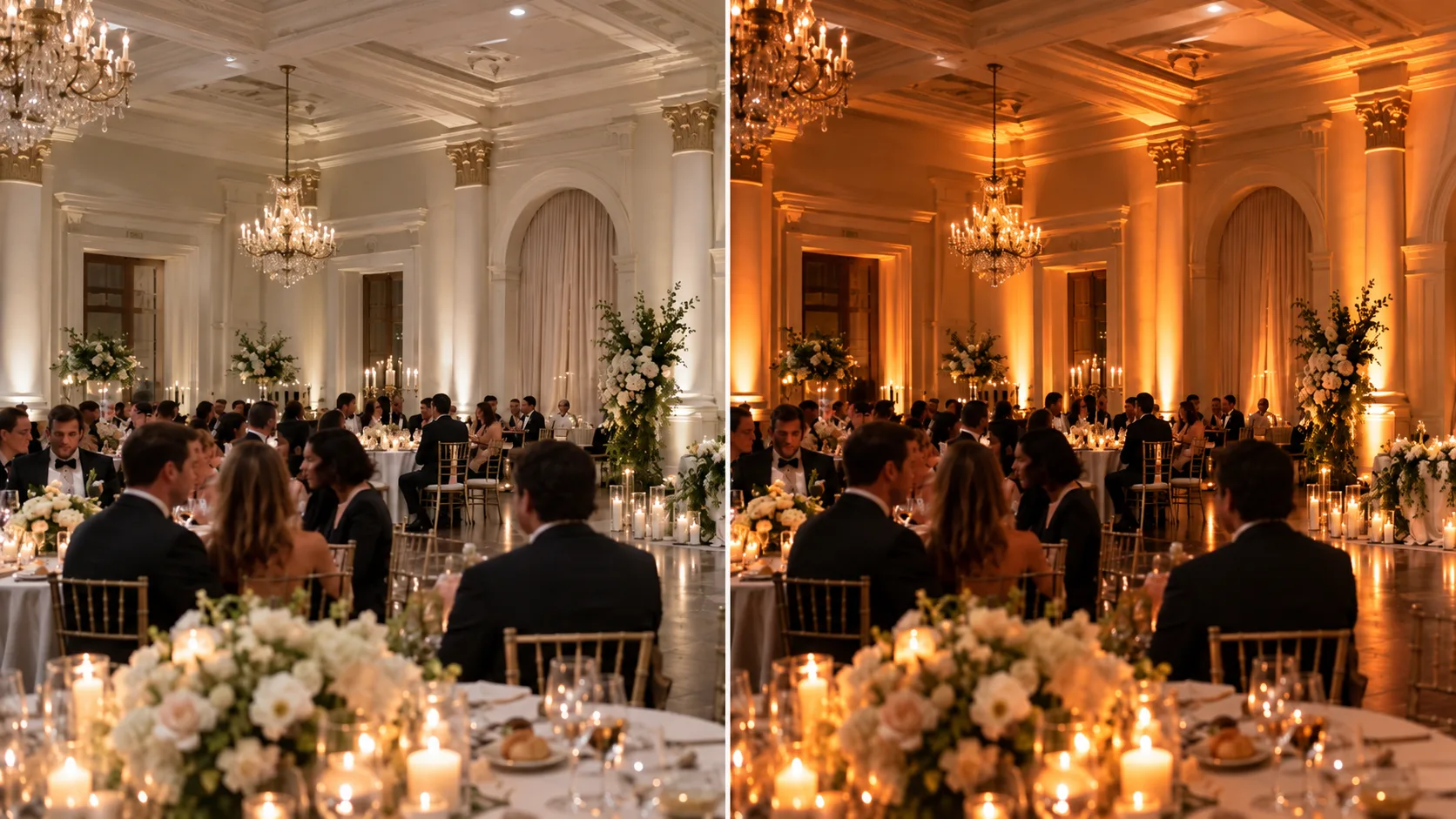
Uplights are small fixtures that sit on the floor around the perimeter of the room and point up at the walls. That is the whole idea. They wash the walls, the columns, the drapes, whatever architecture the room already has, in light and colour.
This is not your dance floor lighting. Dance floor lighting is the moving stuff: beams, movement, energy when the party starts. Uplighting changes how the entire room feels.
One makes the dance floor feel like a party. The other shapes the atmosphere of the whole room.
During dinner it makes a ballroom warmer, softer and more elegant. Later, the same lights become part of the party and change the energy of the space. People mix the two up constantly, and it matters, because they solve different problems.
How many depends on your room, not your guest count
This is the part that surprises people. The number of uplights has very little to do with how many guests you have. A 70-person wedding in a large ballroom may need more than a 180-person wedding in a compact restaurant.
What matters is the room. How much wall is there? Columns, curtains, alcoves? A long head-table wall? Tall ceilings, big windows, dark finishes? Are we highlighting a few features or transforming the whole space?
We do not give couples a "one light every X feet" rule, because two rooms with the same dimensions can look completely different once they are lit. We look at the room and the result you want.
- A smaller venue where the goal is warmth and a few highlighted areas: a modest setup is usually enough.
- A medium reception room where you want even coverage and a noticeable change in atmosphere: a more substantial setup.
- A large ballroom, or a room you want fully transformed: this is where a full uplighting package earns its place.
The goal is not a number. It is a room that looks intentional. Too few lights in the wrong places leave bright patches with dark gaps between them. Enough fixtures, placed properly, give smooth coverage and make the room feel finished. Even in a small room, more uplights can matter, because the aim becomes cleaner coverage rather than more brightness.
The colour question, where most couples go wrong
Here is the mistake I see most often. A couple picks a saturated colour because it looked incredible in a photo, usually a deep blue or a rich purple. It does look incredible when you walk in. Then the photos come back and everyone's skin has a colour cast.
Strong saturated colour is dramatic on the room and unkind to faces.
It is fantastic later, when the floor is open and the photos are supposed to feel energetic anyway. It is much riskier during dinner and speeches, when you want people to look like themselves.
Warm white and soft amber are the safest starting point, and I do not mean safe as in boring. They make almost every room look more expensive than it is, they flatter people, and they photograph beautifully. If you want drama, keep it warm and elegant through dinner, then transition once the dance floor opens.
Uplighting becomes part of the party too
This is the benefit that gets overlooked. When the uplights are part of our lighting system, we control the atmosphere of the entire room, not just the dance floor.
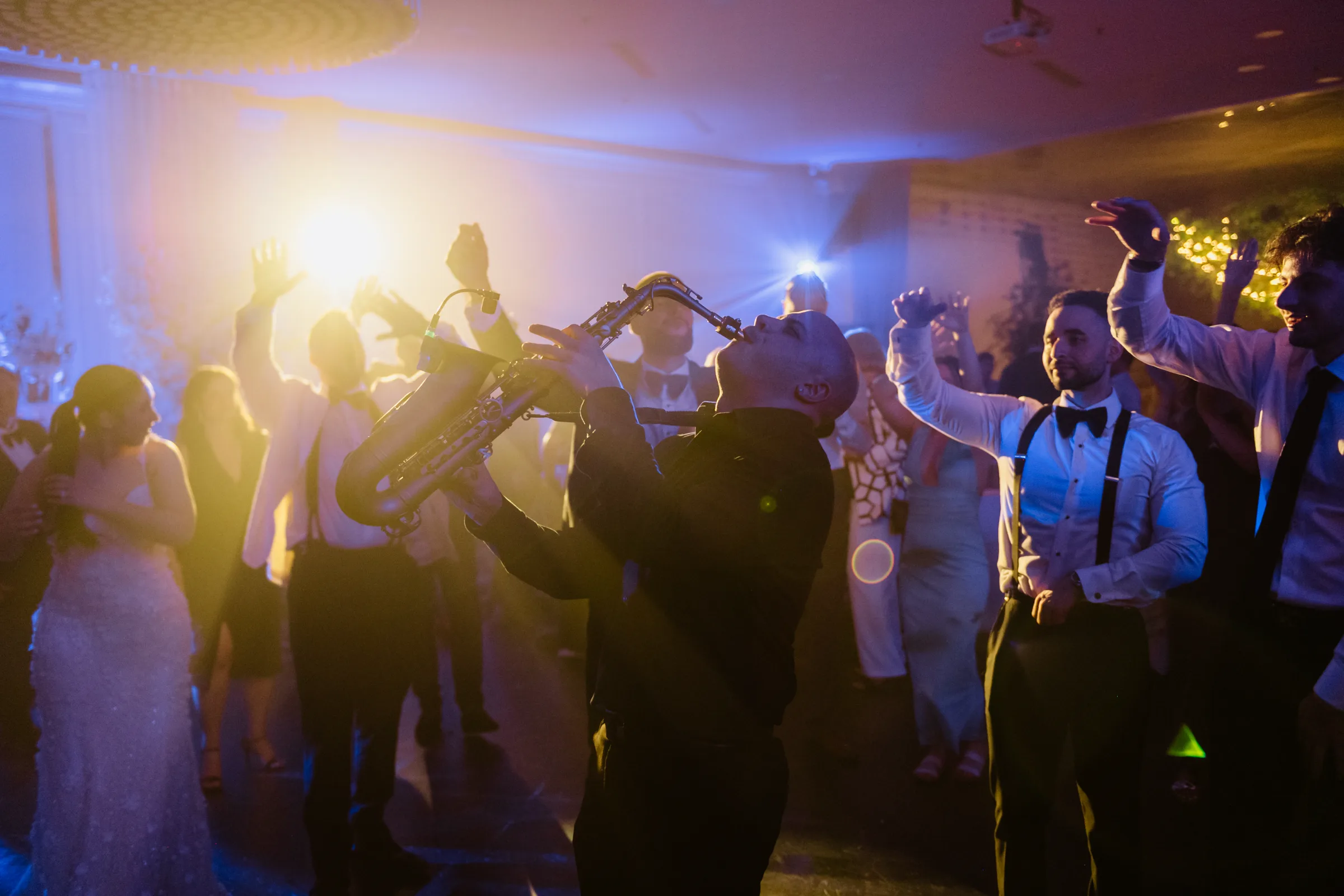
During dinner the walls glow warm amber. Then the formalities end and the room changes. The uplights shift into stronger colours that match the music. We can turn the walls into a party wash, pulse colours on certain moments, add strobe where it fits, or program full-room blackouts for big drops, entrances and special moments.
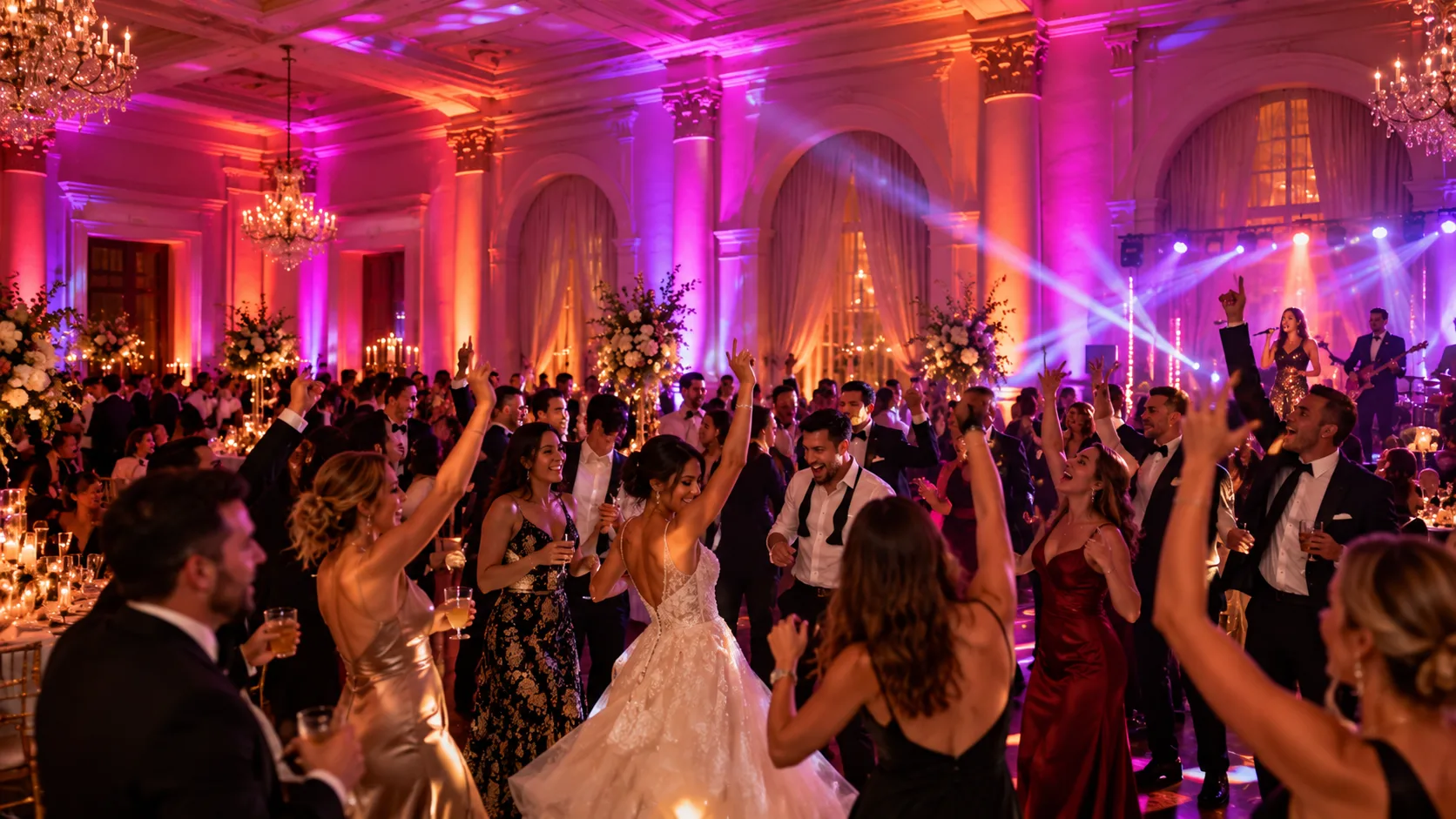
Instead of the dance floor being one energetic island in an otherwise static room, the whole space becomes part of the party. A packed floor feels bigger when the room around it is reacting. And when we want contrast, we take the room dark, hit a blackout, and bring everything back on the drop.
Why it matters more than it sounds like it should
Most venues are lit for eating, not for photographing. The overhead lights are functional and flat, and once the sun goes down the room goes dull in the background of every picture.
Uplighting fixes that. It gives your photographer something to work with behind you, adds depth to a room that would otherwise flatten out, and does it quietly in every shot from the moment guests walk in.
Of everything on your list, it is one of the few upgrades that shows up in almost every photo you get back.
And unlike a décor piece that stays the same all night, it evolves with the event. Elegant during dinner, romantic for the first dance, high energy when the party starts.
The short version
- Uplighting is not about counting lights. It is coverage, placement, colour and timing.
- The count depends on the room, not the guest list.
- Warm white or amber through dinner. Colour once the floor opens.
- Integrated with the rig, the walls become part of the party: washes, pulses, blackouts.
- It is in almost every photo you get back.
If you are not sure how much your venue needs, do not overthink it. Show us the room, tell us the vibe, and we will recommend the right setup. That is the art of it.
Written by
Kloud DJ, live sax and lighting
Runs the lighting design on our weddings and the fifteen-minute sax set from the middle of the floor. New posts land on @btbmtl first.
Show us your room.
Send us your date and your venue. We confirm availability the same day, and we will tell you straight what the room needs.