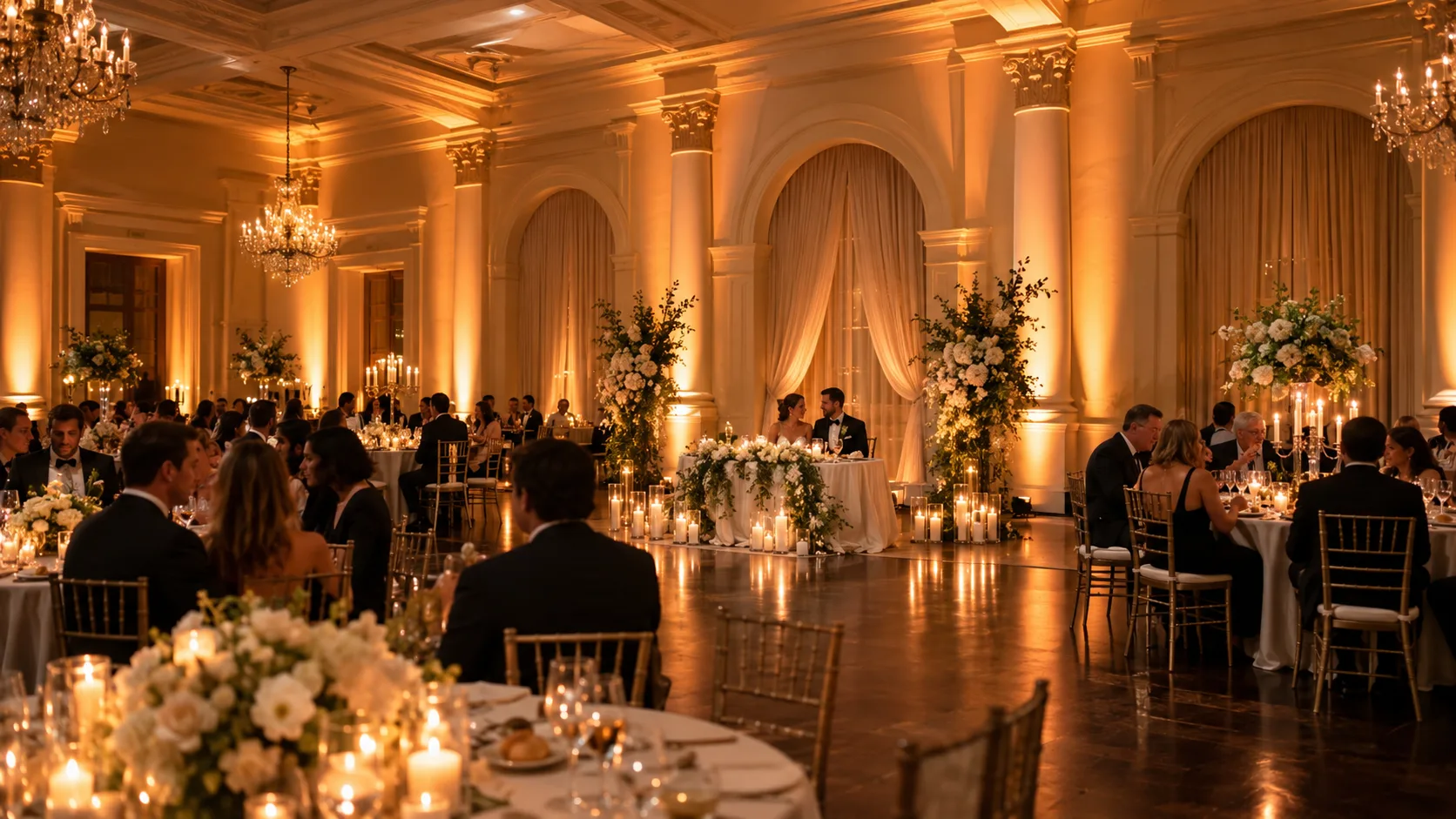
The room looks great. The agenda is full. So why does the evening still feel like work?
There’s a moment at an office holiday party when someone checks the time, looks around the table, and quietly asks, “How long do you think we have to stay?”
Nobody wants that reaction. Certainly not the person who spent weeks comparing venues, managing the budget, and following up on everyone’s dinner selection.
Usually, the issue isn’t a lack of effort. It’s that the evening was planned in pieces.
The venue handled the room. Someone put together the speeches. Entertainment was booked. A few activities were added. Each decision made sense on its own, but nobody quite connected them.
Now the cocktail hour has one atmosphere, dinner has another, and the dance floor feels like a separate event that starts once everything else is finished.
A holiday party works better when the experience starts at the door and carries through to the last song. That doesn’t mean keeping the energy high all night. It means giving the evening a direction, with changes that feel natural rather than abrupt.
Guests shouldn’t have to keep settling into a different event.
The party starts before anyone picks up a microphone
The first impression happens while people are arriving, not during the welcome speech.
Guests are finding the coat check, looking for colleagues, ordering drinks, and deciding whether they feel comfortable. Some have come straight from work. Others have brought a partner who knows almost nobody.
The music, lighting, and welcome are already setting expectations.
If the room is nearly silent, people tend to keep their voices down. If the music is too loud, introductions become hard work. If nobody knows where to go, the entrance becomes a gathering of people asking one another the same questions.
None of this needs a dramatic solution. A clear arrival, a friendly greeting, and music that suits the setting can do a lot.
What matters is that the arrival feels like it belongs to the evening ahead. If the plan is a relaxed, stylish celebration, that should be apparent before guests reach their tables.
There’s no need to announce the atmosphere. Let people walk into it.
Plan one evening, not five separate segments
Cocktails, dinner, recognition, entertainment, and dancing all serve different purposes. They still need to feel like parts of the same night.
That connection goes beyond keeping the schedule on time.
Think about the character of the event. Is it understated and social? Lively and informal? A more polished evening that gradually opens up?
Those choices should guide the music, hosting, lighting, and entertainment together.
A relaxed cocktail hour can build into a busy dance floor. A formal dinner can become a great party. The transition just needs somewhere to go.
If guests are finishing dessert under bright lights with quiet background music, jumping straight into a nightclub-style introduction asks them to make a fairly big adjustment. Give the room a little time to move with you.
The same applies to the theme. A performance, game, or production effect might be impressive on its own and still feel out of place in the evening you’ve created.
Before adding it, ask whether it belongs. “People will notice it” isn’t quite the same as “it will make the night better.”
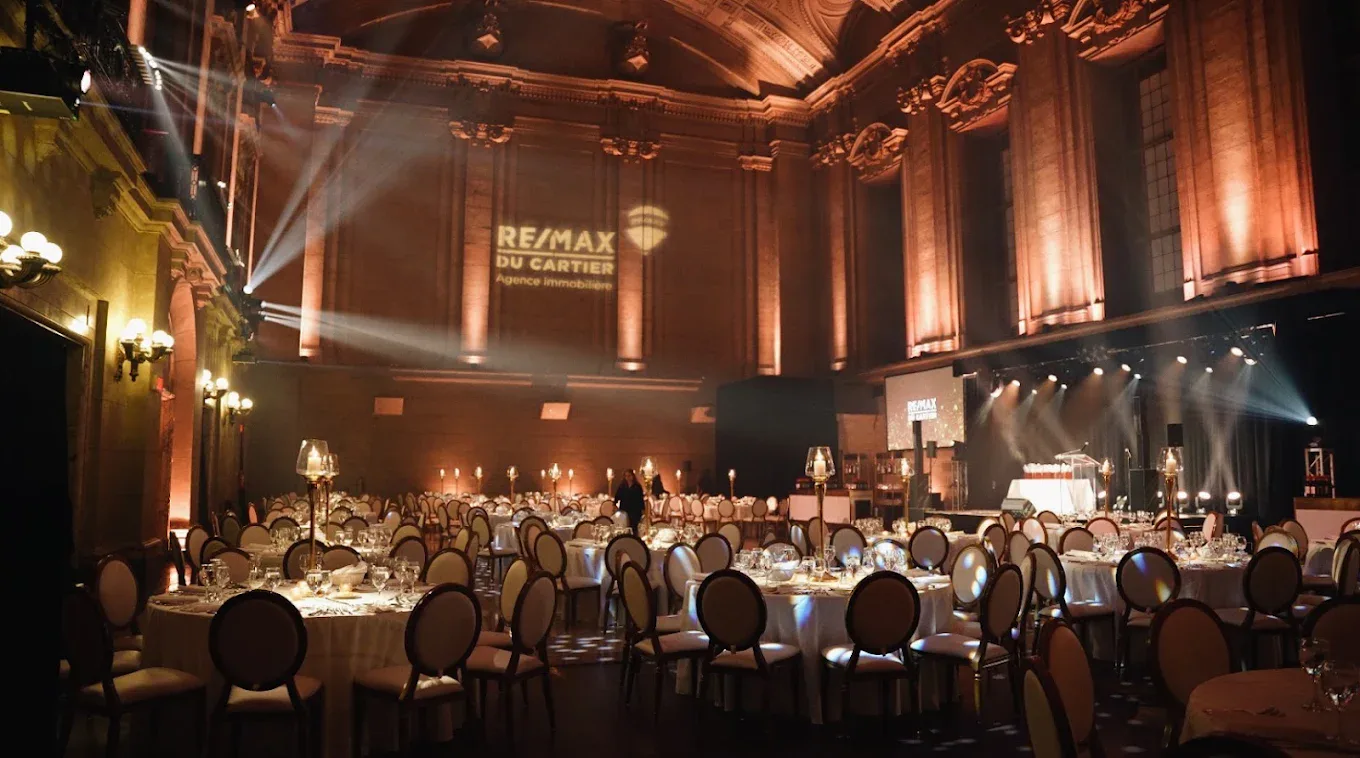
Give the agenda an edit
Holiday party programs tend to grow one reasonable request at a time.
Leadership would like a few minutes. A department wants to recognize someone. There’s a year-end recap, an awards presentation, and an announcement that would be convenient to make while everyone is together.
Then the DJ gets told the dance floor can open “once we’re through all that.”
Recognition belongs at a company celebration. People should hear that their work matters. But appreciation can lose its impact when it’s surrounded by several versions of the same speech.
Have speakers compare notes. Agree on a realistic length. Keep introductions brief, and give each person a clear purpose.
A thoughtful thank-you is worth listening to. A detailed business update may be better saved for a setting where people aren’t waiting for dessert.
Also consider where each speaking moment fits. Grouping a few remarks together may give guests more uninterrupted time to enjoy dinner. A short toast between courses may feel natural, provided it’s coordinated with service.
The goal isn’t to strip the evening of meaning. It’s to make sure the meaningful parts have people’s attention.
Dinner deserves more than background music
For some guests, dinner is the main event.
They’re catching up with someone from another office, meeting a colleague’s partner, or having a conversation that doesn’t end with a deadline.
Give that part of the night some care.
The music should bring something to the room without making people work to hear one another. The lighting should suit the atmosphere while leaving guests comfortable at their tables. Speeches should be coordinated with service rather than compete with it.
These details connect. A good dinner playlist won’t solve awkward pauses between courses. A well-written speech can struggle if plates are arriving throughout it.
This is why the host, catering team, and entertainment team need the same version of the plan.
Pay attention to the end of dinner, too. It’s an easy place for the evening to lose direction. Some guests have coffee, some are ready to dance, and others aren’t sure whether another presentation is coming.
The music can start to shift. Lighting can change. The host can give a brief cue when one is needed.
You’re giving people a sense of what comes next without rushing them out of what they’re enjoying.
Music should connect the night
“Something for everyone” is a reasonable request. It’s also the beginning of the conversation, not the whole brief.
Which songs does this group respond to? Are there French-language favourites to include? Cultural influences that matter? Songs that have become part of the company’s parties over the years?
What worked last time? What cleared the floor?
That context helps build a musical direction rather than a collection of unrelated requests.
The music should also make sense across the evening. Cocktail music doesn’t need to sound like the dance set, but the choices can share a character. Dinner can have rhythm and personality without pushing people to stop talking. Later, familiar tracks can help bridge the move towards dancing.
A useful request at the wrong moment can still feel out of place. So can a technically perfect transition into a song the room isn’t ready for.
Reading the crowd means paying attention to more than who is dancing. People singing at their tables, turning towards the music, or starting to move in their chairs are giving you information too.
And if the dance floor matters, give it time. Opening it late and expecting an immediate response puts unnecessary pressure on everyone.
Let the hosting fit the room
A host helps people understand what’s happening and feel comfortable being part of it.
Sometimes that calls for energy. Sometimes it calls for a clear introduction and getting out of the way.
Not every transition needs a big announcement. Not every quiet moment needs to be filled. And asking whether everyone is having a good time every fifteen minutes rarely makes the answer more convincing.
The tone on the microphone should fit the people attending and the atmosphere around them.
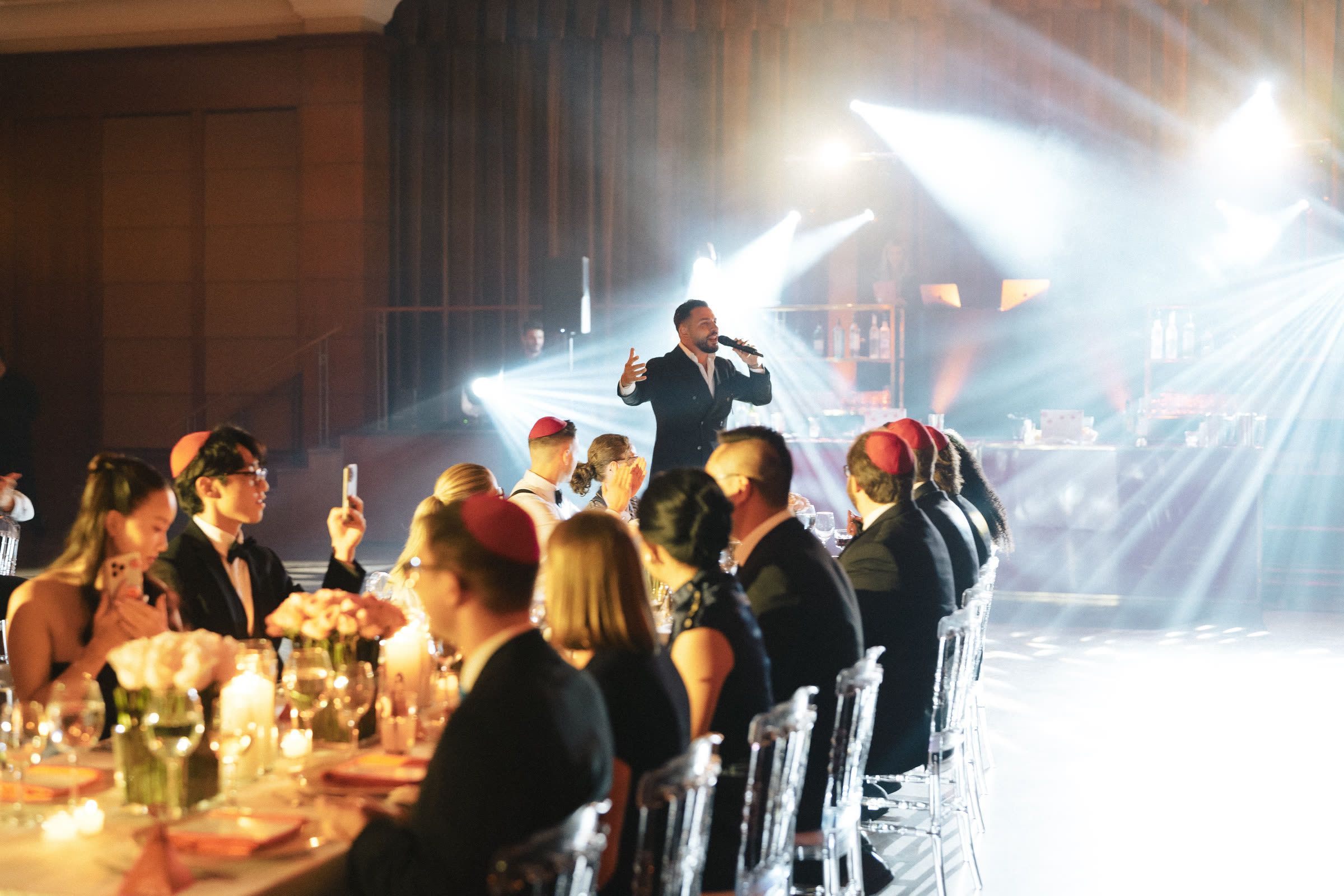
That matters for participation as well. Some teams love games and being called onstage. Others prefer to watch, talk, or join in when they feel ready.
Invite people without making them explain why they’d rather stay seated. The willing participants will usually bring more to an activity than the colleague who has been called out three times.
For a Montreal crowd, think through how French and English will be used throughout the evening. Guests should be able to follow key moments without the hosting becoming a word-for-word repeat of every sentence.
The language, pace, and personality of the hosting are part of the experience. They should feel considered, not added at the last minute.
Make the production belong
Sound, lighting, and entertainment should support the atmosphere you’re building.
That might mean subtle lighting during cocktails, clear sound for recognition, and a more active room later in the evening. It doesn’t mean every available effect needs a turn.
Before deciding what to add, understand the space.
Can the lighting be adjusted throughout the night? Can speeches be heard clearly from every table? Is the dance floor positioned where people will naturally gather? Is there somewhere to keep talking once the music gets louder?
Then consider any additional performances or effects in that context.
A live saxophonist might fit naturally into cocktails or become part of a DJ set later. The right placement depends on the evening. Dropping a performance into an empty slot on the schedule is a different decision from giving it a role.
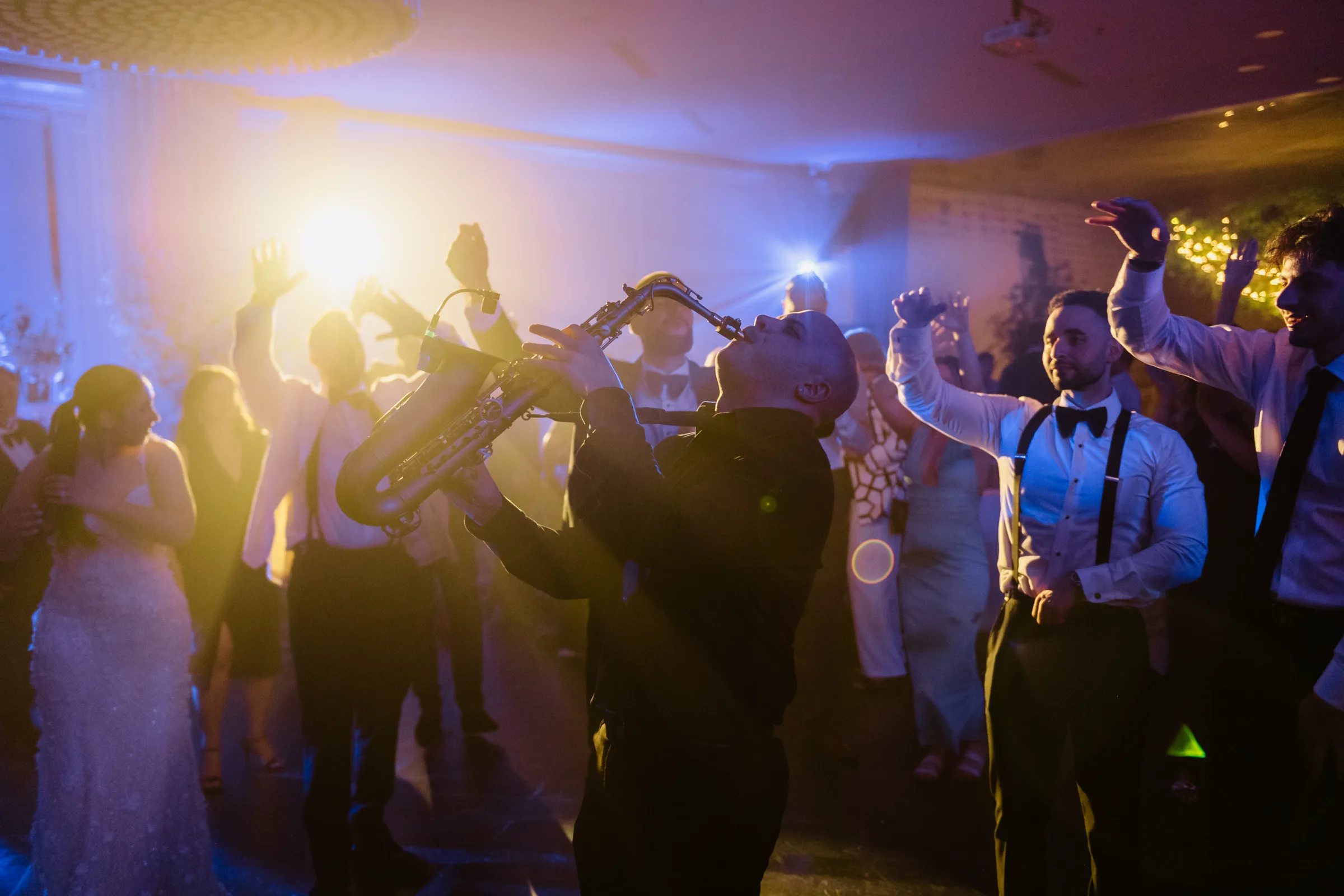
Even a big moment should feel like it came from the same event.
It can surprise people without making them wonder why the night suddenly changed direction.
Protect the flow, not every item on the schedule
A detailed plan helps everyone work together. It should also make adjustments easier.
Before the event, agree on what is fixed, what can move, and what can be shortened or dropped. Make sure someone has the authority to make those calls.
Dinner might run late. A speech might take longer than expected. Guests might be enjoying something more than anticipated.
The answer shouldn’t automatically be to push every remaining item back.
If the dance floor is finally working, consider whether it needs to stop for an optional activity. If a performance has just brought the room together, give that moment some space before moving into an announcement.
There’s a balance here. You don’t abandon the plan every time the mood changes. You use the plan to understand your options.
That’s much easier when the people delivering the event communicate directly, rather than sending the organizer across the room with every update.
The organizer should get to enjoy some of the night they spent weeks putting together.
Give the ending some thought
The end of the night deserves more than switching on the lights when time runs out.
Think about how you want the evening to finish. Is there a final song? Does the host need to share transportation information? Are guests leaving gradually, or is everyone heading out together?
Handle the practical announcements at a sensible moment so the last few minutes don’t become a list of instructions.
The ending doesn’t need to be elaborate. It should feel intentional and consistent with the rest of the evening.

After putting so much thought into welcoming people, it’s worth giving their departure a little attention too.
The night ends, but the next time you pass each other at work, there’s a little more to say.

Written by
Kirky DJ and MC
Kirk Tsipnis is a DJ and MC with Back to Basics.
Planning this year’s holiday party?
Send us the date. We will tell you the same day whether it is open, and the first call is about the night you want your team to have.